Transitioning to renewable energy is one of the most impactful decisions a property owner can make to reduce long-term utility expenses and contribute to environmental sustainability. As the demand for clean energy grows, identifying the Best Solar Panel Installation Companies for Homeowners becomes a critical step in ensuring that the investment yields maximum efficiency and durability.
The market is currently filled with various providers ranging from local family-owned businesses to massive national corporations, each offering different hardware packages, financing structures, and long-term warranties.
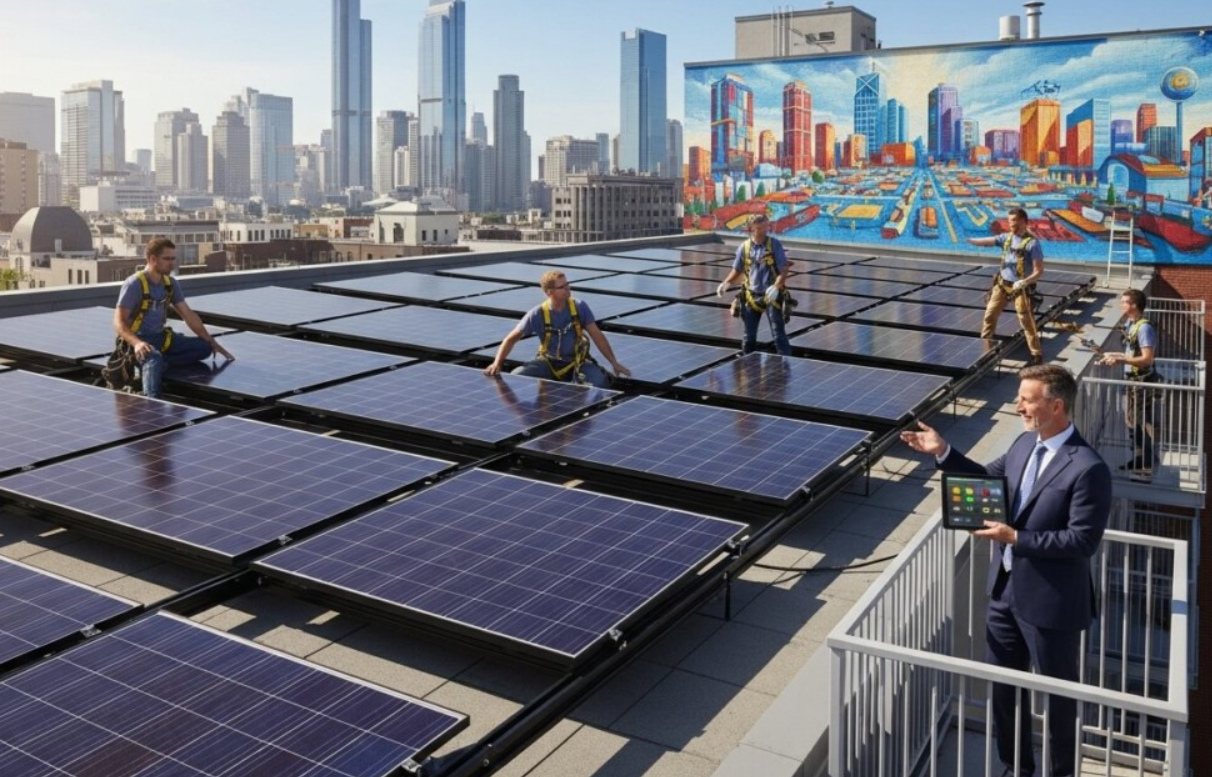
Choosing a solar partner requires more than just looking at the lowest price per watt; it involves evaluating technical expertise, equipment quality, and the stability of the company to provide support over the next twenty-five years. A successful installation depends on precise roof engineering, navigating complex local permitting processes, and maximizing available federal and state tax incentives.
This guide serves as a comprehensive resource to help navigate the landscape of modern solar providers and identify which companies align best with specific residential needs.
The solar industry has undergone significant technological shifts recently, with high-efficiency monocrystalline panels and integrated battery storage systems becoming the new standard. Because solar technology is an evolving field, the installers that lead the market are those who invest in continuous training for their crews and maintain strong partnerships with top-tier equipment manufacturers.
Understanding the nuances between these top-rated firms can save homeowners thousands of dollars in maintenance and energy costs over the lifespan of the system.
Understanding the Current Solar Installation Landscape
The residential solar market is currently split into several distinct categories of service providers. National installers often provide the most streamlined digital experiences and expansive financing options, making them a popular choice for those who want a one-stop-shop solution.
These companies typically have high brand recognition and standardized processes that can handle everything from the initial site audit to the final interconnection with the local utility grid. However, their size can sometimes lead to less personalized customer service compared to smaller regional players.
Local and regional installers, on the other hand, often possess a deeper understanding of local building codes, climate-specific requirements, and niche state-level incentive programs. These firms frequently rely on word-of-mouth reputation, which motivates them to maintain higher standards of craftsmanship and customer interaction.
While they might not always offer the same in-house financing rates as national giants, their pricing can be more competitive due to lower marketing overheads. Deciding between these two types of installers is the first major hurdle for most homeowners.
Beyond the size of the company, the “best” installer is often defined by their “Tier 1” status. This designation refers to companies that use high-quality hardware and have the financial backing to honor their warranties for decades.
When researching providers, it is essential to look for certifications from the North American Board of Certified Energy Practitioners (NABCEP), which is considered the gold standard for solar professional accreditation. A company that prioritizes certified labor is far more likely to deliver a system that operates safely and efficiently.
Top-Rated National Solar Companies for Residential Projects
When looking at the broader market, several names consistently rise to the top based on their volume of successful installations and customer satisfaction scores. These companies have perfected the logistics of residential solar, often managing thousands of projects simultaneously across multiple states.
They provide the stability that many homeowners crave when making a twenty-year commitment to a technology.
SunPower: The High-Efficiency Leader
SunPower is frequently cited as the premium choice for homeowners who have limited roof space but want to maximize energy production. They are unique because they design and manufacture their own solar cells, which are known for having some of the highest efficiency ratings in the industry.
By controlling the entire supply chain from manufacturing to installation, they offer a seamless “all-in-one” warranty that covers every component of the system.
The primary advantage of choosing a company like SunPower is the durability of their Maxeon cell technology. These cells are built on a solid copper foundation, making them highly resistant to the micro-cracking and corrosion that can plague cheaper panels over time.
While the upfront cost is typically higher than competitors, the long-term ROI is often superior due to the higher energy yield and slower degradation rates of the hardware.
ADT Solar: Reliability and Security Integration
Following the acquisition of Sunpro Solar, ADT Solar has become a massive force in the residential market. They leverage their decades-long reputation in home security to provide a sense of trust and reliability that is rare in the relatively young solar industry.
Their approach focuses heavily on comprehensive warranties, including a 25-year labor guarantee and a 25-year power production guarantee, which provides significant peace of mind.
What sets this provider apart is their ability to bundle solar services with home automation and security. For homeowners looking to create a “smart home” ecosystem where energy production and security are managed under one umbrella, ADT offers a unique value proposition.
Their presence in over 20 states ensures they have a robust infrastructure for maintenance and repairs, which is a common concern for solar adopters.
Tesla Solar: Innovation and Aesthetic Appeal
Tesla has revolutionized the aesthetic side of solar with their Solar Roof tiles and sleek, low-profile traditional panels. Their primary draw is the integration with the Powerwall battery system, which is widely considered the industry leader in residential energy storage.
For those prioritizing a modern look and a high-tech user interface via the Tesla app, this company is often the first choice.
However, Tesla’s model is highly automated and digital-first. This means that while prices are often the lowest in the industry due to reduced sales commissions, the customer service experience is primarily handled through an app or online portal.
Homeowners who prefer high-touch, personalized service might find this model challenging, but for those comfortable with a DIY-digital approach, the savings can be substantial.
Comparing Equipment Quality and Technology
The effectiveness of a solar installation is heavily dependent on the hardware selected by the company. Most top-tier installers offer a choice of panels and inverters, but the way they pair these components determines the system’s overall reliability.
It is important to distinguish between the panels (which capture sunlight) and the inverters (which convert that sunlight into usable electricity for the home).
Modern installers generally choose between string inverters with power optimizers or microinverters. Microinverters, such as those made by Enphase, are often preferred for homes with complex roofs or potential shading issues.
Because each panel operates independently, a shadow on one part of the roof won’t bring down the production of the entire system. In contrast, string inverters are often more cost-effective for large, unobstructed south-facing roofs.
- Monocrystalline Panels: These are the standard for residential use, offering the best efficiency and a sleek black appearance.
- Bifacial Modules: Some premium installers now offer panels that can capture light from both sides, which is useful for certain ground-mounted or high-reflectivity roof scenarios.
- Smart Monitoring: The best companies provide real-time monitoring apps that allow homeowners to track production and consumption down to the individual panel level.
- Battery Storage Compatibility: As utility companies move away from 1:1 net metering, the ability to add batteries like the Tesla Powerwall or Enphase IQ Battery is becoming essential.
Cost Structures and Financing Options
The financial aspect of solar installation is often the most complex part of the process. The best companies offer a variety of ways to pay for the system, ranging from cash purchases to various loan and lease programs.
Understanding the difference between these options is vital because it affects who owns the system and who receives the lucrative tax credits.
A cash purchase or a solar loan is generally the most beneficial path for homeowners who want to maximize their return on investment. By owning the system, the homeowner can claim the Federal Investment Tax Credit (ITC), which currently covers 30% of the total installation cost.
Over time, the energy savings combined with the tax benefits allow the system to pay for itself, typically within 6 to 10 years.
Solar leases and Power Purchase Agreements (PPAs) are alternative models where the installation company owns the panels, and the homeowner pays a monthly fee for the equipment or the electricity generated. While this allows for “zero down” installation, the homeowner does not get the tax credits, and the long-term savings are usually much lower.
Some of the best solar panel installation companies for homeowners offer specialized low-interest loans that bridge the gap, providing the benefits of ownership with the ease of a monthly payment.
| Feature | Cash Purchase | Solar Loan | Solar Lease / PPA |
|---|---|---|---|
| Ownership | Homeowner | Homeowner | Installer |
| Upfront Cost | High | Low to Zero | Zero |
| Tax Credits | Go to Homeowner | Go to Homeowner | Go to Installer |
| Maintenance | Homeowner/Warranty | Homeowner/Warranty | Installer Covered |
| Long-term Savings | Highest | High | Moderate |
The Importance of Local Expertise and Permitting
While national companies offer scale, local expertise remains a cornerstone of a successful installation. Every municipality has different rules regarding structural requirements, setbacks from the roof edges, and electrical code compliance.
A company that is intimately familiar with the local building department can often get projects approved and installed weeks or even months faster than a company that is new to the area.
Furthermore, local utility companies have their own specific requirements for “interconnection”—the process of hooking the solar system up to the grid. The best installers handle all this paperwork on behalf of the homeowner.
This includes applying for Net Energy Metering (NEM) programs, which allow homeowners to get credit on their bill for excess energy sent back to the grid. Without proper handling of these administrative tasks, a high-quality hardware setup can sit idle on a roof for months.
Choosing an installer with a strong local presence also ensures that if a technical issue arises or a storm damages the equipment, a repair crew is nearby. National companies sometimes subcontract their labor to local third parties; it is always wise to ask whether the installers are direct employees of the company or independent contractors, as this impacts accountability and quality control.
Evaluating Warranties and Long-Term Support
A solar system is expected to last 25 to 30 years, making the warranty one of the most important documents in the contract. However, not all warranties are created equal.
A comprehensive solar warranty should ideally cover four distinct areas: the equipment (panels and inverters), the workmanship (the actual installation labor), the roof penetration (protection against leaks), and the power production guarantee.
The power production guarantee is particularly important. It ensures that the panels will produce a certain percentage of their original rated power even after 25 years.
Most high-end panels, like those from SunPower, LG, or REC, guarantee at least 86% to 92% of their original output at the end of the warranty period. If the panels degrade faster than promised, the company is obligated to repair or replace them.
“The true value of a solar company isn’t found on the day of installation, but ten years later when the system needs service and the company is still there to honor its commitment.”
Workmanship warranties vary significantly between providers. Some companies offer only 1 to 5 years of labor coverage, while the best solar panel installation companies for homeowners provide 25 years.
This covers issues like loose wiring, mounting hardware failure, or any damage caused during the installation process. Always read the fine print to see if the warranty is transferable to a new owner if the home is sold, as this can add significant resale value to the property.
Steps to Choose the Right Solar Provider
Navigating the selection process requires a systematic approach to filter out low-quality providers and focus on those that offer the best value and reliability. Since solar is a significant investment, it is recommended to follow a structured evaluation method before signing any long-term contracts.
- Gather Multiple Quotes: Never settle for the first quote. Use platforms like EnergySage or contact companies directly to get at least three comparable bids. This allows for a direct comparison of price-per-watt and equipment quality.
- Check Licenses and Insurance: Verify that the company holds a valid electrical contractor license in your state and carries sufficient general liability and workers’ compensation insurance.
- Read Recent Customer Reviews: Look for reviews from the last 6 to 12 months on independent sites. Pay attention to how the company handles complaints or system failures.
- Verify Equipment Specifications: Ensure the quote lists the specific model numbers of the panels and inverters. Research these components to ensure they are “Tier 1” rated.
- Analyze the Financing Terms: If opting for a loan, check the interest rate, dealer fees, and whether there are penalties for early repayment. Dealer fees can sometimes add 10-25% to the total cost of the system.
- Assess the Site Audit Process: A reputable company will perform a detailed physical inspection of your roof and electrical panel before finalizing the design. Avoid companies that rely solely on satellite imagery for their final price.
Environmental Impact and Energy Independence
Beyond the financial savings, the move toward solar energy is a major step toward personal energy independence. Homeowners who install solar are less vulnerable to the volatile price spikes of fossil-fuel-based electricity.
As the grid ages and power outages become more common in many regions, combining solar with battery storage provides a “microgrid” capability that keeps lights on and refrigerators running during emergencies.
The environmental benefits are equally compelling. A typical residential solar system can offset approximately 100 tons of carbon dioxide over its lifetime.
This is equivalent to planting thousands of trees or avoiding the consumption of tens of thousands of gallons of gasoline. For many, the knowledge that their home is powered by clean, silent sunlight is a reward that goes beyond the monthly bill savings.
The industry is also improving its recycling capabilities. Organizations and manufacturers are increasingly focusing on the “circular economy,” ensuring that at the end of their 30-year life, solar panels are dismantled and their materials—glass, aluminum, and silicon—are reused in new products.
This makes solar one of the most sustainable technologies available to the modern consumer.
Solar Incentives and Tax Credits to Watch For
The cost of going solar is significantly mitigated by various government incentives. The most prominent is the Federal Investment Tax Credit (ITC), which allows you to deduct 30% of the cost of installing a solar energy system from your federal taxes.
This credit applies to both the equipment and the labor costs, and it currently has no cap on the total amount.
In addition to federal benefits, many states offer their own incentives. Some states provide additional tax credits, while others offer “Solar Renewable Energy Certificates” (SRECs).
In an SREC market, homeowners earn one credit for every megawatt-hour of electricity their system produces, which can then be sold to utilities for additional cash income. Some local municipalities also offer property tax exemptions, ensuring that the added value of the solar system doesn’t increase your annual property tax bill.
To find the most current incentives, it is recommended to visit the Database of State Incentives for Renewables & Efficiency (DSIRE). This portal is the most comprehensive source of information on incentives and policies that support renewables and energy efficiency in the United States.
Navigating these options with a knowledgeable solar consultant can often result in a system that costs 50% less than the “sticker price” after all incentives are applied.
Potential Challenges and How to Overcome Them
While the benefits are numerous, there are challenges that can arise during the solar journey. One of the most common issues is roof condition.
If a roof is more than 10 to 15 years old, it is usually recommended to replace it before installing solar. Most solar companies will coordinate with a roofing contractor, or some even have in-house roofing divisions to handle this as part of a single project.
Another challenge is Homeowners Association (HOA) restrictions. While many states have “Solar Access Laws” that prevent HOAs from banning solar panels, they can still impose certain aesthetic requirements regarding placement and visibility.
The best solar panel installation companies for homeowners are experienced in drafting site plans that comply with HOA guidelines while still maintaining optimal energy production.
Finally, there is the issue of “orphan systems”—solar setups where the original installer has gone out of business. This is why financial stability is a key metric when choosing a provider.
Opting for a company that has been in business for at least a decade, or a large national brand, minimizes the risk of being left without support. If you do find yourself with an orphan system, many local electrical companies specialize in third-party solar repair and can take over the maintenance of the system.
The Future of Home Solar Technology
The industry is moving toward “Energy Management Systems” rather than just simple solar panels. Future installations will likely involve bi-directional charging, where your electric vehicle (EV) can act as a backup battery for your home (Vehicle-to-Home or V2H technology).
This integration turns the home into a dynamic participant in the energy grid, capable of selling power back during peak demand times when prices are highest.
We are also seeing the rise of “Virtual Power Plants” (VPPs). Some installers now offer programs where homeowners with battery storage can opt-in to let the utility company draw a small amount of power from their battery during grid emergencies in exchange for ongoing compensation.
This collaborative approach helps stabilize the grid for everyone while putting money back into the homeowner’s pocket.
Advancements in panel technology, such as perovskite solar cells and shingled cell designs, continue to push the boundaries of what is possible. While these technologies are still emerging in the residential market, they promise even higher efficiencies and lower costs in the coming decade.
Staying informed through a reputable installer ensures that you are getting the most modern hardware available today.
Conclusion
Investing in solar energy is a multi-decade commitment that requires careful consideration of technology, financing, and the reputation of the installer. The Best Solar Panel Installation Companies for Homeowners are those that provide transparency in pricing, use high-quality Tier 1 components, and offer robust warranties that protect the homeowner’s investment against the unknown.
Whether choosing a national leader like SunPower for its efficiency or a local expert for personalized service, the key is to perform due diligence and compare multiple options.
Ultimately, the transition to solar is about more than just lowering a monthly utility bill; it is about taking control of energy production, increasing property value, and participating in the global shift toward a cleaner, more resilient energy future. By following the steps outlined in this guide and leveraging available tax incentives, homeowners can make a confident decision that benefits both their finances and the planet for years to come.
Frequently Asked Questions (FAQ)
What is the average cost of solar panel installation for a typical home?
The cost varies significantly based on the size of the system and the location. On average, most homeowners spend between $15,000 and $25,000 after the federal tax credit is applied.
This price usually includes all hardware, labor, permitting, and grid interconnection fees. The price-per-watt metric is the best way to compare quotes across different companies.
How long do solar panels actually last?
Most modern solar panels are designed to last 25 to 30 years or more. While they don’t typically “stop working” at that point, their efficiency gradually declines over time.
Most manufacturers guarantee that their panels will still produce at least 80-90% of their original power output after 25 years. With proper maintenance, a system can continue to generate electricity for four decades.
Do I need a battery backup system with my solar panels?
A battery backup is not strictly necessary if you are connected to the grid and your utility offers net metering. However, a battery is essential if you want to have power during a grid outage or if your utility has high “time-of-use” rates or poor net metering policies.
Batteries like the Tesla Powerwall allow you to store excess daytime energy for use at night or during emergencies.
Will solar panels damage my roof?
When installed correctly by a professional, solar panels actually protect the portion of the roof they cover from UV rays and weathering. Installers use specialized flashing and sealants to ensure that all roof penetrations are completely waterproof.
Most reputable companies offer a “roof penetration warranty” to cover any leaks that might occur as a result of the installation.
What happens if I sell my house after installing solar?
Studies have shown that homes with owned solar systems often sell faster and for a premium compared to homes without them. If you own the system, the value is simply added to the home’s price.
If you have a solar lease or PPA, the contract must be transferred to the new buyer, which requires them to meet the credit requirements of the solar company. This is why ownership is generally preferred for resale purposes.
How do I know if my roof is suitable for solar?
The best roofs for solar are south-facing with little to no shade from trees or nearby buildings and have a tilt between 15 and 40 degrees. However, east and west-facing roofs can still be very productive.
A professional solar installer will use specialized software to calculate the “solar solar irradiance” of your roof and determine if the energy production will provide a sufficient return on investment.