Securing a large residential property presents a unique set of challenges that standard off-the-shelf security kits often fail to address. Sprawling estates, multi-acre lots, and large floor plans require a sophisticated infrastructure to eliminate blind spots and ensure seamless communication between sensors and the central hub.
Protecting these substantial investments involves more than just a doorbell camera; it demands a comprehensive strategy that integrates perimeter defense, internal monitoring, and advanced automation to create a multi-layered shield against potential intruders. Finding the Best Home Security Systems for Large Residential Properties is essential for homeowners who prioritize peace of mind and the safety of their families across expansive grounds.
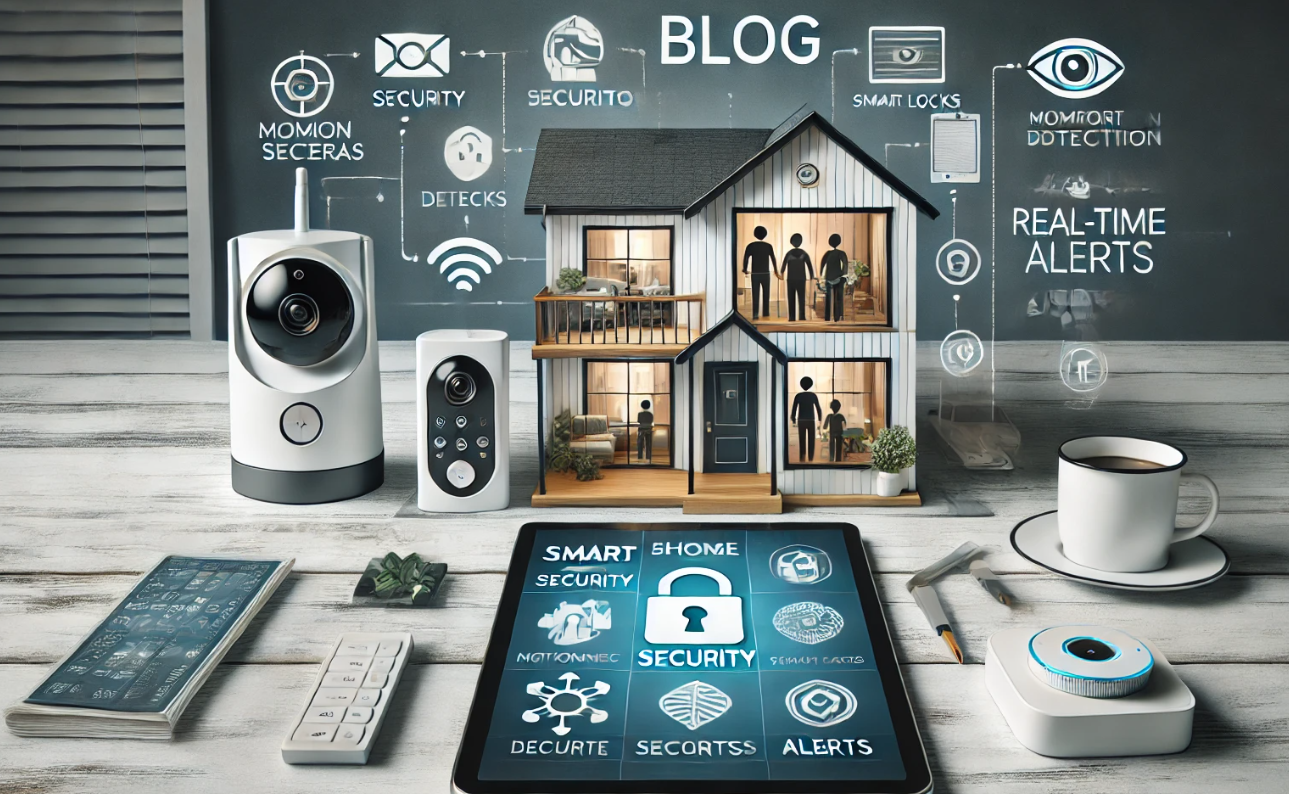
The complexity of a large property means that signal range becomes a critical factor. In a typical suburban home, a standard Wi-Fi router might suffice, but for estates with detached garages, guest houses, or long driveways, the security architecture must be robust enough to bridge long distances.
High-end systems utilize mesh networking, signal repeaters, and hardwired Power over Ethernet (PoE) connections to maintain a constant link. This ensures that a motion sensor at the far end of a perimeter fence can trigger an immediate alert at the main house without lag or connectivity drops.
High-resolution imaging and intelligent analytics also play a role in distinguishing between a wandering animal and a legitimate security threat.
Modern technology has moved beyond simple alarms to proactive prevention. For large residences, the integration of smart lighting, thermal imaging, and professional monitoring services creates a formidable deterrent.
Property owners are increasingly looking for systems that offer scalability, allowing them to add more cameras or sensors as the landscape evolves. Whether it is a luxury villa or a multi-generational family estate, the right security setup acts as a silent guardian that works around the clock.
By understanding the specific needs of large-scale environments, it is possible to design a system that is both unobtrusive and incredibly effective at mitigating risks.
The Foundation of Security for Expansive Estates
Large properties require a structural approach to security that begins at the very edge of the land. Unlike smaller homes where the focus is primarily on entry points like doors and windows, an estate needs a perimeter-first mindset.
This involves creating concentric circles of protection, where the outer boundary serves as the first line of defense. By detecting an intruder long before they reach the main residence, homeowners gain valuable time to react or for security personnel to intervene.
This layer usually includes heavy-duty gates, fence sensors, and long-range infrared cameras.
Connectivity is the backbone of any reliable system in a large-scale setting. Standard wireless systems often struggle with thick stone walls or the sheer distance between the hub and peripheral devices.
Professionals often recommend a hybrid approach, using hardwired connections for critical outdoor cameras and a dedicated, encrypted wireless sub-network for internal sensors. This prevents the security system from competing for bandwidth with household streaming devices, ensuring that critical alerts always have priority.
A stable network ensures that the Best Home Security Systems for Large Residential Properties operate at peak performance without technical hiccups.
Perimeter Protection and Gate Integration
The gate is the primary checkpoint for any large property and serves as the gateway to the entire security ecosystem. Modern gate security involves more than just a padlock; it requires integrated intercoms with video capabilities that allow residents to vet visitors from a smartphone app or a dedicated wall tablet.
These systems can be programmed with unique access codes for staff, delivery drivers, and guests, providing a digital log of everyone who enters or exits the premises. Advanced systems even feature license plate recognition (LPR) to automatically grant access to known vehicles.
Beyond the gate, fence-line sensors play a vital role in detecting unauthorized scaling or cutting of the perimeter. Fiber-optic sensors or vibration-sensitive cables can be attached to fencing to provide instant notification of a breach.
These sensors are often calibrated to ignore wind or small animals, reducing the likelihood of false alarms. When a perimeter breach is detected, the system can automatically pivot nearby PTZ (Pan-Tilt-Zoom) cameras to the area of interest, providing live visual confirmation to the monitoring center or the homeowner.
Advanced Camera Technology for Wide Coverage
In a large residential setting, the sheer volume of space to monitor can lead to “camera fatigue” if the hardware is not chosen wisely. Using dozens of low-resolution cameras often results in grainy footage that is useless for identification.
Instead, high-end installations favor 4K resolution cameras with large image sensors that perform exceptionally well in low-light conditions. These cameras provide the detail necessary to identify faces or read license plates even from a significant distance, which is crucial when covering long driveways or wide lawns.
Strategic placement is just as important as the technology itself. For large properties, “blind spots” are the enemy.
Professional installers use heat mapping and sightline analysis to ensure that every square inch of the vulnerable area is covered. This often includes the use of panoramic 180-degree or 360-degree cameras on building corners to minimize the number of units required while maximizing the field of view.
Intelligent video analytics integrated into these cameras can detect specific behaviors, such as loitering or a vehicle parked in a restricted zone, and send targeted alerts.
Thermal Imaging and Night Vision Capabilities
Large properties often have significant areas of unlit terrain, such as woods, gardens, or private lakes. Standard infrared night vision has a limited range, often reaching only 30 to 60 feet.
For truly comprehensive coverage, thermal imaging cameras are the superior choice. Thermal technology detects heat signatures rather than light, allowing the system to “see” a person or vehicle in total darkness, through fog, or behind dense foliage.
This is an invaluable tool for early detection in rural or heavily landscaped estates.
Coupling thermal cameras with traditional high-definition optical cameras creates a dual-threat system. The thermal sensor detects the presence of a heat-emitting object at a great distance, and the optical camera zooms in to provide a detailed visual.
This combination is a staple in the Best Home Security Systems for Large Residential Properties, as it provides a level of situational awareness that standard consumer-grade products simply cannot match. It ensures that the darkness of a large backyard is no longer a hiding place for potential intruders.
The Role of Artificial Intelligence in Reducing False Alarms
One of the most significant frustrations for owners of large properties is the frequency of false alarms triggered by wildlife, moving tree branches, or changing weather conditions. Traditional motion sensors are often too sensitive for outdoor use over large areas.
This is where Artificial Intelligence (AI) and Machine Learning come into play. Modern security software can now differentiate between a human, a pet, a vehicle, and a swaying limb.
By filtering out non-threatening movement, the system ensures that the homeowner only receives notifications that truly matter.
AI also enables features like “line crossing” and “intrusion zones.” A homeowner can draw a virtual line around a swimming pool or a sensitive outbuilding on their digital map.
If someone crosses that line, the system triggers a specific response, such as turning on floodlights or playing a recorded voice warning. This proactive stance moves the security system from a reactive recording device to an active deterrent that can scare off intruders before they even attempt to enter the home.
The precision offered by AI is a cornerstone of effective modern estate management.
Integration with Smart Home Ecosystems
For a residence to be truly secure, the security system must talk to the rest of the house. Integration with smart home platforms like Crestron, Savant, or Control4 allows for sophisticated automated sequences.
For instance, if a perimeter alarm is triggered at 2:00 AM, the system can automatically turn on every interior and exterior light, unlock smart locks for emergency responders, and display the relevant camera feed on every television in the house. This immediate and coordinated response can disorient an intruder and provide the residents with clear information.
Voice control and centralized tablets also simplify the management of a complex system. In a large home, walking to the front door to see who is there is inconvenient.
Having the ability to view any camera from a bedside tablet or via a voice command to a smart speaker adds a layer of convenience and safety. These integrations also allow for remote management, so a homeowner can monitor their estate from anywhere in the world, ensuring that “away” truly means “protected.
”
Choosing Between DIY and Professional Installation
While DIY security systems have improved significantly, they often fall short when applied to large residential properties. The primary limitation is the lack of specialized hardware designed for long-range transmission and environmental durability.
Professional-grade equipment is built to withstand harsh weather and utilizes components that offer higher reliability. Furthermore, the installation process for a large estate involves complex wiring, network configuration, and strategic mounting that typically requires a professional touch to ensure no gaps are left in the coverage.
Professional installers also provide a level of customization that is unavailable in “box” solutions. They can conduct a thorough risk assessment, identifying unique vulnerabilities such as a hidden basement entrance or a vulnerable second-story balcony.
Moreover, professional systems often come with superior warranties and dedicated support teams who can troubleshoot issues remotely. For a high-value property, the investment in a professionally designed and installed system is often outweighed by the reliability and comprehensive protection it provides.
Table: Comparison of System Types for Large Properties
| Feature | Standard Wireless (DIY) | Pro-Grade Hybrid/Wired | High-End Estate Systems |
|---|---|---|---|
| Range | Limited (approx. 100-150ft) | Extensive (via PoE/Mesh) | Unlimited (Fiber/Microwave) |
| Video Quality | 1080p to 2K | 4K Ultra HD | 4K + Thermal Imaging |
| AI Analytics | Basic (Human/Pet) | Advanced (LPR/Behavior) | Custom AI Modeling |
| Scalability | Limited by Hub | Highly Scalable | Virtually Unlimited |
| Installation | Self-Installed | Professional Needed | Custom Engineered |
Top-Rated Systems for Large Residences
Several brands have established themselves as leaders in providing the Best Home Security Systems for Large Residential Properties by focusing on durability, range, and integration. While names like Vivint and ADT offer robust professional monitoring and high-end hardware, other players like Lorex and Hikvision provide the industrial-strength cameras necessary for vast outdoor spaces.
The choice often depends on whether the homeowner prefers a turnkey service with monthly monitoring or a self-managed system with professional-grade hardware.
Vivint is frequently cited for its seamless integration and “Proactive Protection” features. Their outdoor cameras use light and sound to deter intruders actively.
For a large property, Vivint’s professional installation ensures that all sensors and cameras are positioned for maximum effect. Their system is highly intuitive, making it easy to manage even when dozens of sensors are active across a large acreage.
The centralized control via their Smart Hub acts as the “brain” of the home, coordinating everything from cameras to smart thermostats.
ADT, particularly through their “ADT Custom Home” division, caters specifically to luxury estates. They offer white-glove service that includes a dedicated security consultant to design a bespoke system.
ADT’s strength lies in its massive monitoring network, ensuring that there is always a redundant center ready to respond to an alarm. For large properties, they often incorporate physical panic buttons and advanced environmental sensors that detect leaks or fire in distant guest houses, providing a holistic safety net.
Lorex and PoE Systems for Maximum Reliability
For those who want the highest possible video quality and do not mind a more “hands-on” approach to management, Lorex offers exceptional 4K PoE (Power over Ethernet) systems. PoE is the gold standard for large properties because a single cable provides both power and high-speed data to the camera.
This eliminates the need for nearby power outlets and ensures a lag-free video stream that cannot be jammed by wireless interference. Lorex systems often feature massive hard drives for local storage, which is essential for recording multiple 4K streams 24/7.
Lorex cameras are built with metal housings and “Vandal-Proof” ratings, making them ideal for exposed areas of a large property. They also offer “No-Monthly-Fee” options, which appeal to homeowners who want professional hardware without being tied to a subscription.
However, it is important to note that without professional monitoring, the responsibility for responding to an alert falls entirely on the homeowner. For many estate owners, the best approach is to have a Lorex hardware setup integrated into a professional monitoring service.
Essential Features to Look For
When evaluating the Best Home Security Systems for Large Residential Properties, there are several non-negotiable features that must be present. First is the ability for Redundant Connectivity.
A high-end system should have a cellular backup so that if an intruder cuts the internet line, the system can still communicate with the monitoring center. Similarly, a battery backup is crucial to keep the cameras and sensors running during a power outage, which can be common in rural areas where many large estates are located.
Second, Two-Way Audio has become a vital tool for property management. Being able to speak through an outdoor camera allows a resident to give instructions to a delivery driver at the gate or warn a trespasser that the police have been called.
On a large property, this “voice of god” feature can prevent a situation from escalating by letting the intruder know they are being watched in real-time. It adds a psychological layer of defense that complements the physical locks and cameras.
- High-Resolution 4K Video: Essential for identifying intruders at a distance.
- Professional Monitoring: 24/7 oversight by trained agents who can dispatch emergency services.
- Environmental Sensors: Detecting water leaks, smoke, and carbon monoxide in remote parts of the property.
- Smart Home Integration: Controlling lights, locks, and gates from a single interface.
- Mobile App Access: Real-time alerts and live feeds available on smartphones and tablets.
- Geofencing: Automatically arming or disarming the system based on the resident’s location.
How to Optimize System Placement for Large Lots
Proper placement is the difference between a system that works and one that provides a false sense of security. In large residential properties, the “choke points” are the most critical areas to monitor.
These include the main driveway, side entrances, and any paths leading from the woods or neighboring lots. By focusing high-resolution cameras on these narrow areas, the system is more likely to capture a clear image of an intruder’s face or license plate as they are forced to pass through the bottleneck.
Elevated mounting positions are also beneficial for large areas. Mounting cameras on the eaves of a second story or on dedicated poles provides a “bird’s eye view” that can cover much more ground than a camera mounted at eye level.
This also makes it significantly harder for an intruder to tamper with or spray-paint the camera lens. For the most comprehensive coverage, a mix of high-angle overview cameras and low-angle identification cameras is the recommended strategy used by security professionals.
Protecting Detached Structures
Many large properties include detached structures such as barns, workshops, guest houses, or pool houses. These areas are often targeted by thieves because they are less likely to be occupied and may contain expensive equipment or vehicles.
Extending the security system to these buildings requires specialized hardware. If the distance is too great for standard wiring, “Wireless Bridges” can be used to beam a high-speed data signal from the main house to the outbuilding, allowing for seamless camera and sensor integration.
Each detached structure should be treated as its own “zone” within the security software. This allows the homeowner to arm the workshop while the guest house remains disarmed, or vice versa.
Motion-activated floodlights around these structures are particularly effective, as the sudden illumination in a quiet part of the property is often enough to deter a criminal. Integrating these buildings into the main system ensures that there is no “weak link” in the estate’s overall security profile.
Future Trends in Residential Estate Security
The future of securing large properties lies in the increased use of Autonomous Surveillance. We are already seeing the emergence of security drones that can automatically launch from a charging station when a perimeter sensor is triggered.
These drones can fly to the location of the breach and provide a live aerial video feed, following an intruder across the property. This technology is particularly useful for massive estates where it might take several minutes for a human guard to reach the far end of the land.
Another emerging trend is the use of Biometric Access Control beyond just the front door. Facial recognition for gate entry and fingerprint scanners for high-value areas like home offices or wine cellars are becoming more common.
These technologies eliminate the risk of stolen keys or shared passcodes, ensuring that only authorized individuals can move through the property. As AI continues to evolve, these systems will become even more accurate and easier to integrate into daily life.
Conclusion: Investing in Peace of Mind
Securing a large residential property is a significant undertaking that requires a blend of high-end hardware, intelligent software, and strategic planning. The Best Home Security Systems for Large Residential Properties are those that offer a multi-layered defense, starting at the perimeter and extending to every corner of the estate.
By prioritizing high-resolution imaging, robust connectivity, and professional monitoring, homeowners can create an environment that is not only safe but also convenient to manage. The goal is to create a system that works silently in the background, providing comprehensive protection without interfering with the lifestyle of the residents.
Ultimately, the right security system is an investment in the long-term value and safety of the property. While the initial cost of a professional-grade, multi-zone system may be higher than a standard home kit, the level of protection it offers for high-value assets and, more importantly, for the people living there, is immeasurable.
As technology continues to advance, the ability to monitor and protect large expanses of land will only become more effective, allowing estate owners to enjoy their properties with total confidence and peace of mind.
Frequently Asked Questions
What is the best way to get Wi-Fi to a gate at the end of a long driveway?
For long distances where traditional Wi-Fi cannot reach, the most reliable method is using a Point-to-Point (P2P) wireless bridge. This involves two small antennas—one on the main house and one at the gate—that “talk” to each other over several miles if necessary, providing a high-speed data link for cameras and intercoms.
Alternatively, running a direct-burial fiber optic cable is the most robust, though more expensive, solution.
Do I need professional monitoring for a large estate?
While self-monitoring is an option, professional monitoring is highly recommended for large properties. In the event of an emergency, the distance between the main house and the site of the incident may make it difficult for the homeowner to respond personally.
Professional agents can verify the threat via video and dispatch the police or fire department immediately, often faster than an individual could, especially if the homeowner is away or asleep.
How many cameras do I typically need for a 5-acre property?
The number of cameras depends on the topography and the number of structures, but a typical 5-acre estate usually requires between 12 and 24 cameras for full coverage. This includes 4-6 cameras for the main house exterior, 2 at each gate or entrance, 2-4 for each detached building, and several long-range or PTZ cameras to cover open fields or garden areas.
A professional site survey is the best way to determine the exact number needed.
Can weather affect the performance of security sensors on a large lot?
Yes, extreme weather like heavy rain, snow, or thick fog can interfere with standard motion sensors and some camera types. To combat this, owners of large properties should look for “IP67” or “IP68” rated equipment, which is fully waterproof and dust-tight.
Additionally, using thermal cameras and AI-driven software helps the system maintain accuracy during poor visibility by focusing on heat signatures and ignoring environmental noise.
Is it possible to integrate an existing old security system into a new smart estate setup?
In many cases, yes. Professionals can use “takeover modules” or “translators” that allow older wired sensors to communicate with modern smart hubs.
However, for a large property, it is often better to upgrade the core components to take advantage of modern encryption and high-definition video, which older systems cannot support. This ensures the entire property is protected by the latest, most secure technology.